 CPOMS
 Accelerated Reader
 Bedrock Learning
 Numbots
 Times Tables Rock Stars
 Phonics Bug Club
 Letter-join
 Tootoot
 OLSJ Apps
 SPaG Tests
 TES SPaG Games
 Third Space Maths Hub

Handwriting
"Whatever you do, work at it with all your heart."
Colossians 3:23
At Our Lady and St Joseph Catholic Primary School, we believe that handwriting is a fundamental life skill. Fluent, legible handwriting allows children to communicate their ideas confidently, present their work with pride and write efficiently across the curriculum.
Our aim is for every child to develop a clear, consistent and automatic handwriting style that enables them to focus on the composition of their writing rather than the mechanics of recording it. Through explicit teaching, regular practice and consistently high expectations, children develop handwriting that is both functional and aesthetically pleasing.
Our Handwriting Approach
At OLSJ, we use Letter-join as the basis of our handwriting curriculum. This progressive programme supports children from their earliest mark making in the Early Years through to fluent, joined handwriting by the end of Key Stage 2. It provides a carefully sequenced programme of learning that meets the requirements of the National Curriculum while ensuring clear progression across the school.
Handwriting is taught through regular, planned lessons and is reinforced across the curriculum. We believe handwriting is a cross-curricular skill and should be modelled and valued in every classroom. Teachers consistently model our agreed handwriting style through shared writing, marking, classroom displays and everyday teaching, ensuring children experience a coherent and consistent approach throughout their time at OLSJ.
Our curriculum develops children's handwriting by teaching:
- correct letter formation;
- pencil grip and posture;
- letter orientation and sizing;
- spacing between letters and words;
- joining techniques;
- handwriting fluency; and
- pride in presentation.
A Print to Cursive Journey
Children begin their handwriting journey using Letter-join Print Plus in the Early Years Foundation Stage and Year 1. This print style includes simple exit strokes that prepare children for joined handwriting while developing accurate letter formation and confidence.

From Year 2, children begin learning Letter-join Plus, our continuous cursive handwriting style. This introduces lead-in and lead-out strokes, allowing pupils to develop a fluent, joined handwriting style that becomes increasingly automatic as they progress through the school.
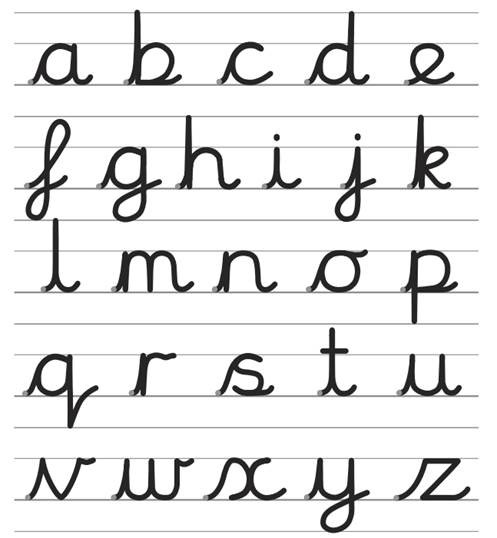
Children are also explicitly taught the correct formation of capital letters, ensuring consistency across all aspects of their handwriting.

Developing Good Handwriting Habits
Successful handwriting begins with strong foundations.
From the Early Years onwards, teachers explicitly teach and regularly reinforce:
- correct sitting posture;
- tripod pencil grip;
- appropriate paper position;
- correct letter formation;
- letter sizing;
- spacing;
- joins; and
- presentation.
Children in Reception and Year 1 explore handwriting using a wide variety of media including chalk, charcoal, crayons, paint and pencils before progressing to more formal handwriting activities. This helps develop the fine motor control, strength and coordination needed for successful handwriting. Once these foundations are secure, children begin writing using a soft pencil before progressing to a handwriting pen when appropriate.
Handwriting Posture and Pencil Grip
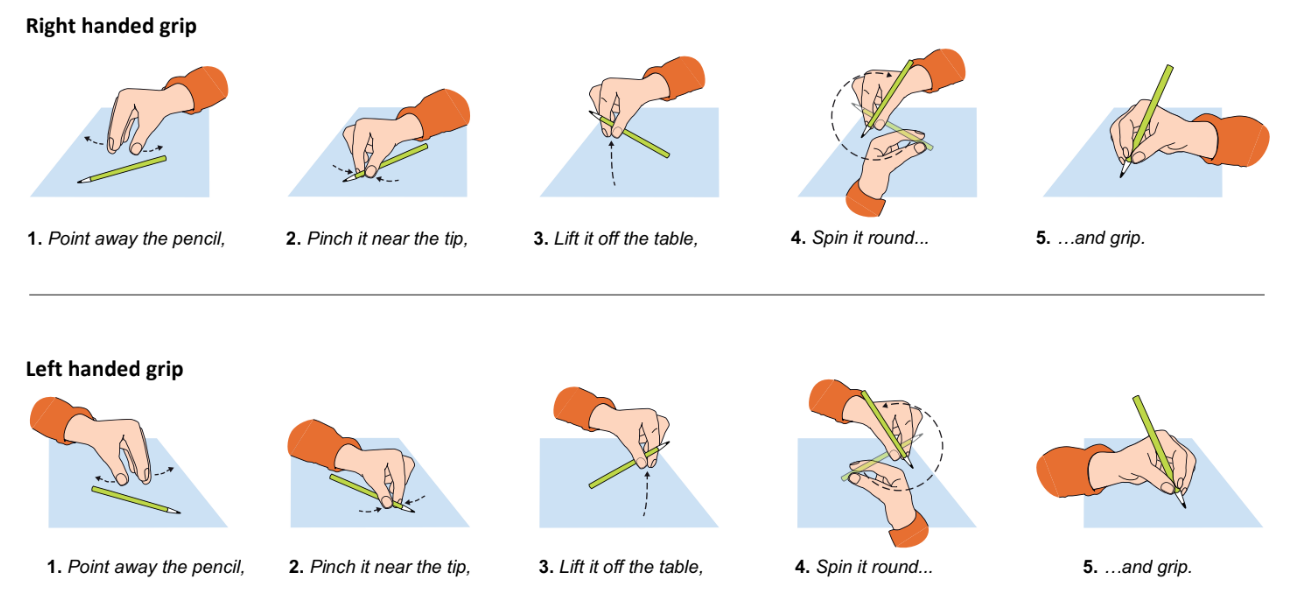
It is important that children sit comfortably and hold a pencil correctly for handwriting from the start; some children may need repeated intervention to achieve this.
Comfortable Sitting Position and Correct Paper Position
This will help children be more comfortable, enabling them to write for sustained periods.
Tripod Pencil Grip
How to hold a pencil correctly for handwriting:
| Action | Description |
|---|---|
| Quack, Quack Fingers | Start your warm-up by making a beak with your thumb and first finger on both hands. Make them quack twice, then do the same with your other fingers. |
| Roly-Poly Pencil | Start your warm-up by making a beak with your thumb and first finger on both hands. Make them quack twice, then do the same with your other fingers. |
| Crawling Caterpillar | Hold your pencil ready to write. Move the pencil through your three fingers to the top like a crawling caterpillar. When you get to the top, make your caterpillar crawl back down again! |
| Helicopter Twirls | Hold your pencil in the middle with your three correct fingers. Make a twirling helicopter by moving your fingers one at a time from one side of the pencil to the other. |

Progression Across the School
Early Years Foundation Stage
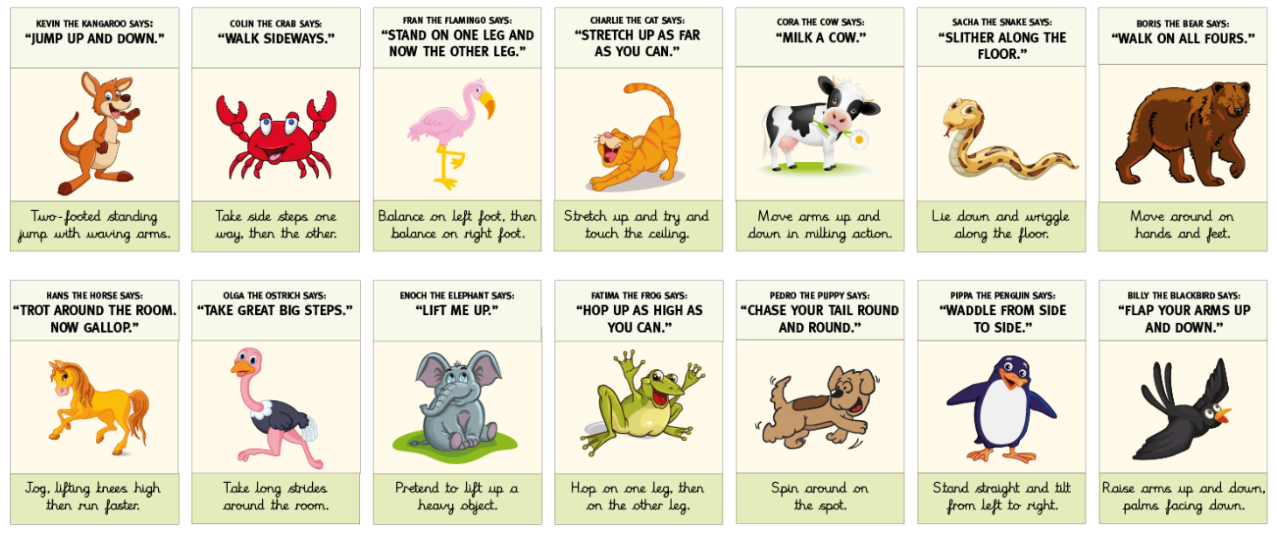
Handwriting begins long before children write letters independently.
Children develop the physical foundations for writing through:
- gross motor activities;
- fine motor development;
- mark making;
- pencil control;
- correct posture;
- letter recognition and formation; and
- daily opportunities to develop communication and language.
Children learn to form printed lowercase letters accurately while developing confidence through purposeful mark making in both the indoor and outdoor learning environments.
Fine Motor Skills
Letterjoin also uses a range of fine motor skills activities before lessons. The aim of these is to wake up fingers and hand muscles before the children begin to write.
Finger and Hand Exercises
| Action | Description |
|---|---|
| Finger Stretches | Put the tips of your fingers together and straighten your fingers by pushing your fingertips against each other. Repeat 5 times. |
| Play the Piano | Touch the table with one finger at a time from each hand like you are playing the piano. Start slowly and get faster. |
| Fishing Hooks | Put your elbows on the table, keep your hands apart, squeeze your fingers together and point them to the sky. Keep your knuckles straight and make a hook with your fingers. Hold, then straighten five times. |
| Fireworks | Make a fist with both hands and hold them tight. Then let your fingers go like exploding fireworks! Repeat five times. |
| Take a Bow | Put your elbows on the table, keep your hands apart, squeeze your fingers together and point them to the sky. Bend your knuckles but keep your fingers straight so your fingers bow to each other. Repeat 5 times. |
Key Stage 1
In Year 1, children continue to develop accurate printed handwriting while learning correct capital letters, numbers and symbols. Pre-cursive patterns are introduced in preparation for joined handwriting.
During Year 2, pupils begin using our continuous cursive handwriting style. Regular practice develops confidence in joining letters, improving fluency, consistency and presentation.
Key Stage 2
Throughout Key Stage 2, handwriting lessons focus on developing increasingly fluent, consistent and automatic handwriting.
Children continue to improve:
- letter joins;
- spacing;
- presentation;
- writing speed;
- stamina; and
- application across the wider curriculum.
By Upper Key Stage 2, pupils are expected to write fluently and consistently across all subjects, adapting their handwriting appropriately for different purposes while maintaining high standards of presentation.
Pen Licences

At OLSJ, we celebrate excellent handwriting through our Pen Licence Award system.
Children from Year 2 onwards can work towards four levels of achievement, recognising the progress they make as their handwriting develops.
| Award | Expectations |
|---|---|
| Standard | Letters are correctly formed and appropriately sized with clear orientation. Presentation and spacing are becoming increasingly consistent (Typical of secure Year 2 expectations) |
| Bronze | Writing is mostly legible with consistent sizing and spacing. Children begin joining letters appropriately and demonstrate increasing control. (Working towards Year 3 expectations) |
| Silver | Handwriting is neat, consistently joined and well controlled, with increasing fluency and speed. (Typical of secure Year 3 and Year 4 expectations.) |
| Gold | Handwriting is fluent, consistently joined and well presented. Writing is automatic and no longer impacts composition, allowing children to focus fully on communicating their ideas. (Typical of secure Year 5 and Year 6 expectations) |
The Pen Licence system celebrates effort, perseverance and pride in presentation while encouraging children to continually develop their handwriting throughout their time at OLSJ.
Supporting Every Child
We recognise that children develop handwriting skills at different rates.
Teachers carefully adapt lessons to meet individual needs and provide additional support where appropriate. This may include targeted fine motor activities, adapted resources, additional handwriting practice or personalised interventions. Left-handed pupils are supported through appropriate classroom positioning and guidance to ensure they develop comfortable and efficient handwriting habits.
Our aim is for every child to experience success and develop confidence as a writer.
Handwriting at Home
Parents play an important role in supporting handwriting development.
Children can access Letter-join at home using their individual login to practise the skills they have been learning in school.
The online platform includes engaging activities such as:
- Magic Patterns
- Magic Words
- Letter Families
- Letter Match
- Sound Match
- Phonics Match
- Letter Lotto
- Word Banks
- Word Searches
- Spelling Lists
- Write it Right!
Children can also watch letter formation animations and explore a range of interactive activities designed to reinforce learning and build handwriting fluency.
Handwriting Terminology
To support consistency between school and home, we use the following handwriting vocabulary:
| Term | Meaning |
|---|---|
| Handwriting where letters are formed separately. | |
| Cursive | Joined handwriting style. |
| Capital Letters | Uppercase letters used at the beginning of sentences or for proper nouns. |
| Lowwrcase Letters | The letters used for the majority of writing. |
| Ascenders | Letters that extend above the main body of the writing, for example b, d, h and i. |
| Descenders | Letters that extend below the writing line, for example g, j, p, q and y. |
| Letter Body | The central part of a letter between ascender and descender. |
| Entry Stroke | The stroke used to begin forming a letter. |
| Exit Stroke | The stroke used to finish a letter and prepare for joining. |
|
Our full handwriting policy can be found here: |

Loading...
