CPOMS
 Accelerated Reader
 Bedrock Learning
 Numbots
 Times Tables Rock Stars
 Phonics Bug Club
 Letter-join
 Tootoot
 OLSJ Apps
 SPaG Tests
 TES SPaG Games
 Third Space Maths Hub

Science
In OLSJ we provide a high-quality science education, which is delivered through the disciples of biology, chemistry and physics. This provides children with the foundations for understanding the world around us. It is essential that all pupils are grounded in the knowledge, methods, processes and applications of science to be ready for a life where Science is at the centre of the future of the human race and planet earth. Through building up a body of key foundational knowledge and concepts, pupils should be encouraged to recognise the power of rational, explanation and develop a sense of excitement and curiosity about natural phenomena. Pupils should be encouraged to understand how science can be used to explain what is occurring, predict how things will behave, and analyse causes. At OLSJ we teach 2 hours of science a week. We follow the national curriculum but also try to make links wherever possible with our topic, literacy and maths. Each unit of work consists of exploration through investigations (both long and short) looking for changes over time and gathering evidence and results and drawing conclusions from these.
Each year we have Science week at OLSJ. This is a chance for teachers to go ‘off topic’ with their teaching and include some extra exciting experiments for the children to carry out. There is also a science competition that gives children the chance to think carefully about the changing world around them.
EYFS
At the Early Years Foundation Stage, teachers guide their pupils in working scientifically through exploration, observations and real-life experiences. Through these, pupils gain insight of people, places, technology and the environment and begin to make logic of the world around them. The working scientifically skills which are developed within the foundation stage are:

At OLSJ, pupils are delivered their Science education through the ‘Understanding the World’ strand of the EYFS curriculum. Teachers continually assess all children against the learning and development bands, the Early Learning Goal and Exceeding descriptors through focused activities and observations of their play and exploration. Children’s progress is evidenced in their Learning Journals and their 2Simple profiles.
The pupils are assessed according to the age bands under the ‘Understanding the World’ area of learning on entry to Nursery and Reception, and at the end of each term. This enables staff to know every child’s starting points in their early Science skills, and as they track progress termly they can then plan to develop scientific inquiry and skills into each half-termly topic.
This ensures pupils are making progress towards achieving or exceeding the ‘Understanding the World’ Early Learning Goal at the end of Reception.
Pupils have a wide range of starting points on entry to Nursery and Reception, the table below highlight the range of progress we aim to achieve as children progress through the Early Years Foundation stage:
|
Nursery age bands |
Understanding of the world Development Band |
|---|---|
|
16 – 26 months |
|
|
22 – 36 months |
|
|
30 – 50 months |
|
|
Reception age bands |
Understanding of the world Development Band |
|
40 – 60+ months |
|
|
Early Learning Goal |
|
|
Exceeding the Early Learning Goal |
|
KS1 and KS2
The programmes of study for science in the 2014 Primary National Curriculum are set out year-by-year for key stages 1 and 2. Schools are, however, only required to teach the relevant programme of study by the end of the key stage. Within each key stage, we therefore have the flexibility to introduce content earlier or later than set out in the programme of study. In addition, we can introduce key stage content during an earlier key stage if appropriate. At OLSJ we will set out our curriculum for science on a year-by-year basis and make it available online.
KS1
The principal focus of science teaching in Key Stage 1 is to enable pupils to experience and observe phenomena, looking more closely at the natural and humanly-constructed world around them.
They should be encouraged to be curious and ask questions about what they notice.
They should be helped to develop their understanding of scientific ideas by using different types of scientific enquiry to answer their own questions, including observing changes over a period of time, noticing patterns, grouping and classifying things, carrying out simple comparative tests, and finding things out using secondary sources of information.
They should begin to use simple scientific language to talk about what they have found out and communicate their ideas to a range of audiences in a variety of ways.
Most of the learning about science should be done through the use of first-hand practical experiences, but there should also be some use of appropriate secondary sources, such as books, photographs and videos.
‘Working scientifically’ is described separately in the programme of study, but must always be taught through and clearly related to the teaching of substantive science content in the programme of study.
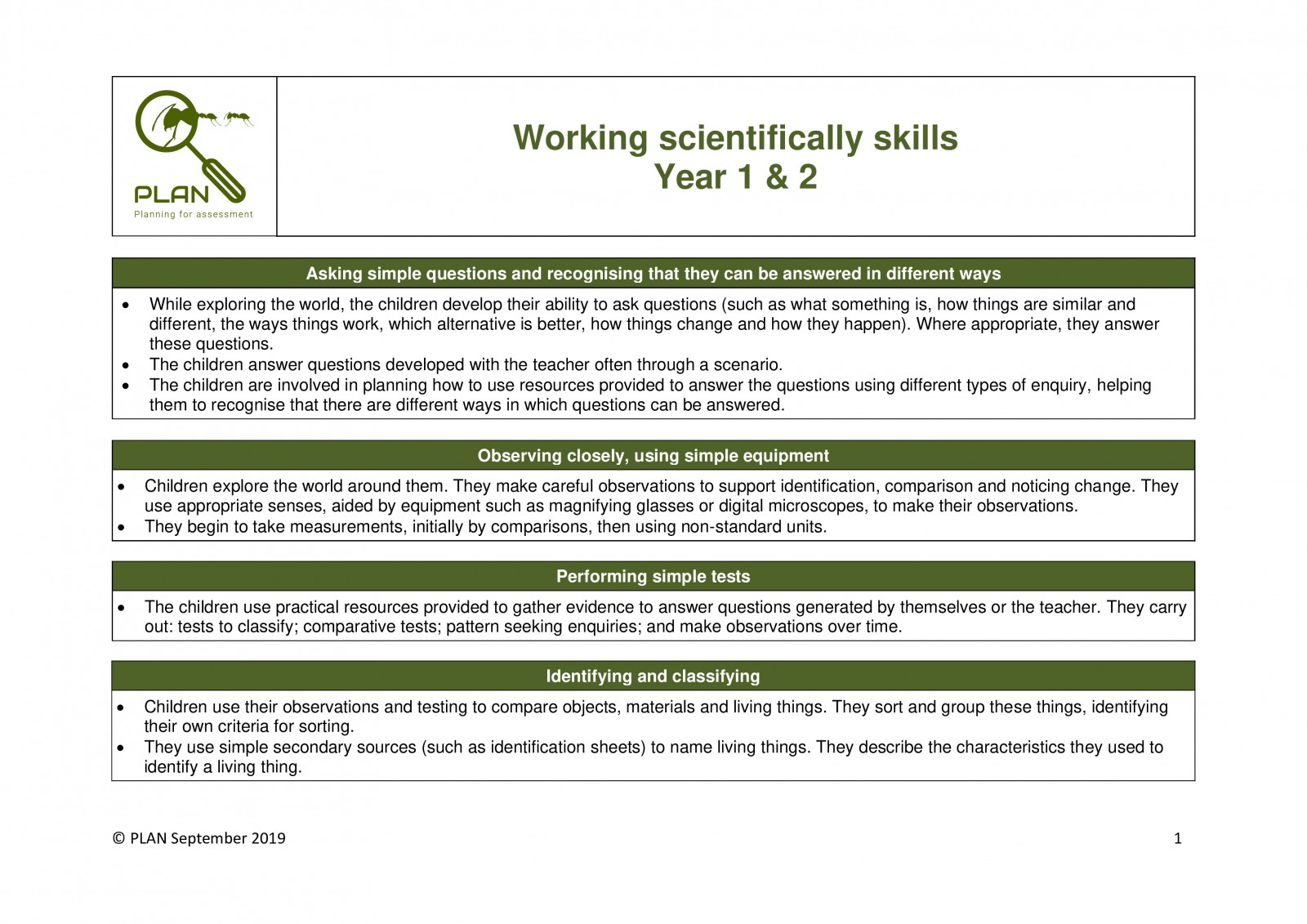
During years 1 and 2, pupils should be taught to use the following practical scientific methods, processes and skills through the teaching of the programme of study content:

Throughout the notes and guidance, examples show how scientific methods and skills might be linked to specific elements of the content. Pupils should read and spell scientific vocabulary at a level consistent with their increasing word reading and spelling knowledge at Key Stage 1.
Curriculum Coverage
|
Year 1 |
Everyday Materials |
Animals, including Humans |
Plants |
Seasonal Changes |
|---|---|---|---|---|
|
Year 2 |
Uses of Everyday Materials |
Animals, including Humans |
Living Things and their Habitats |
Plants |
KS2
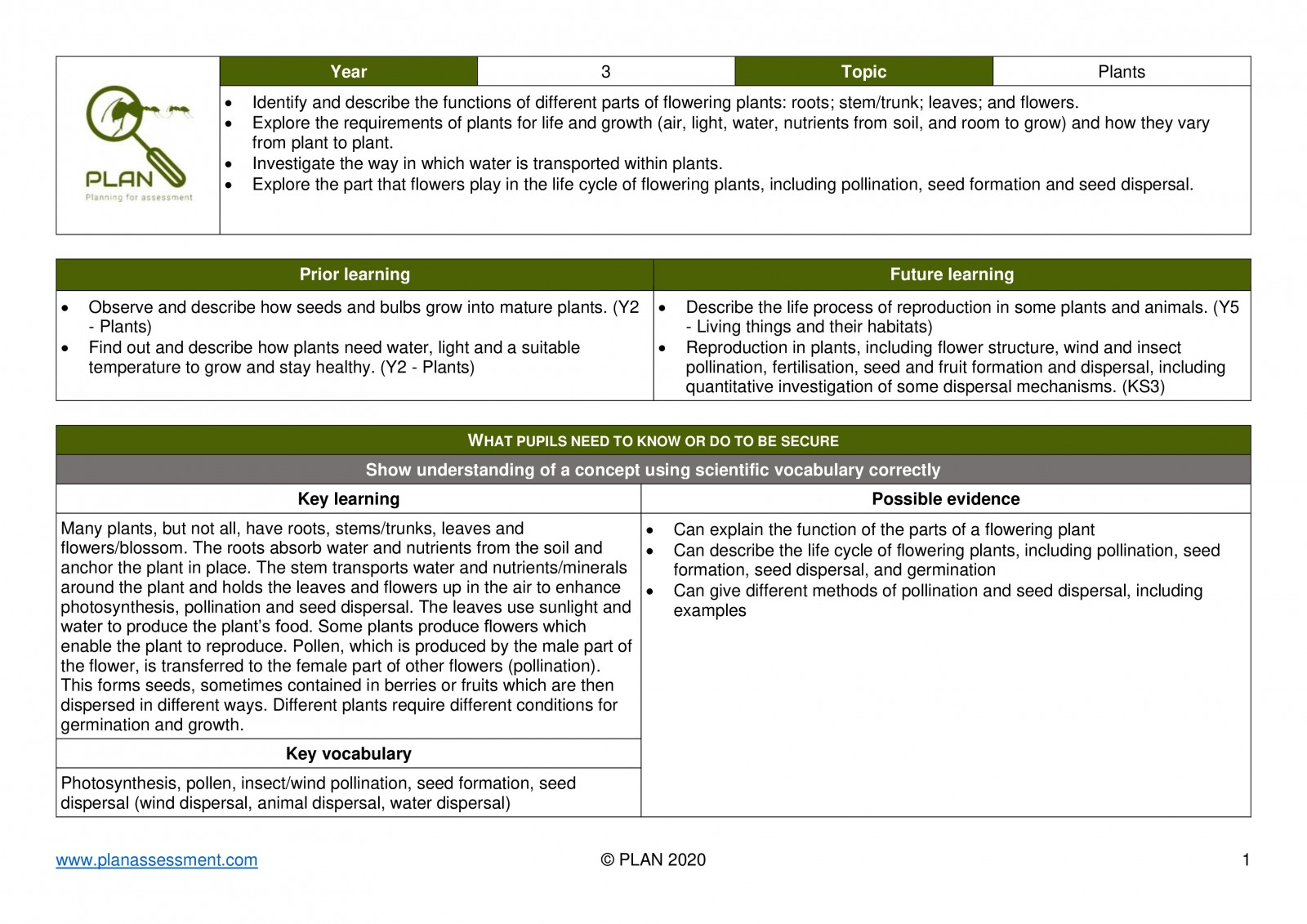
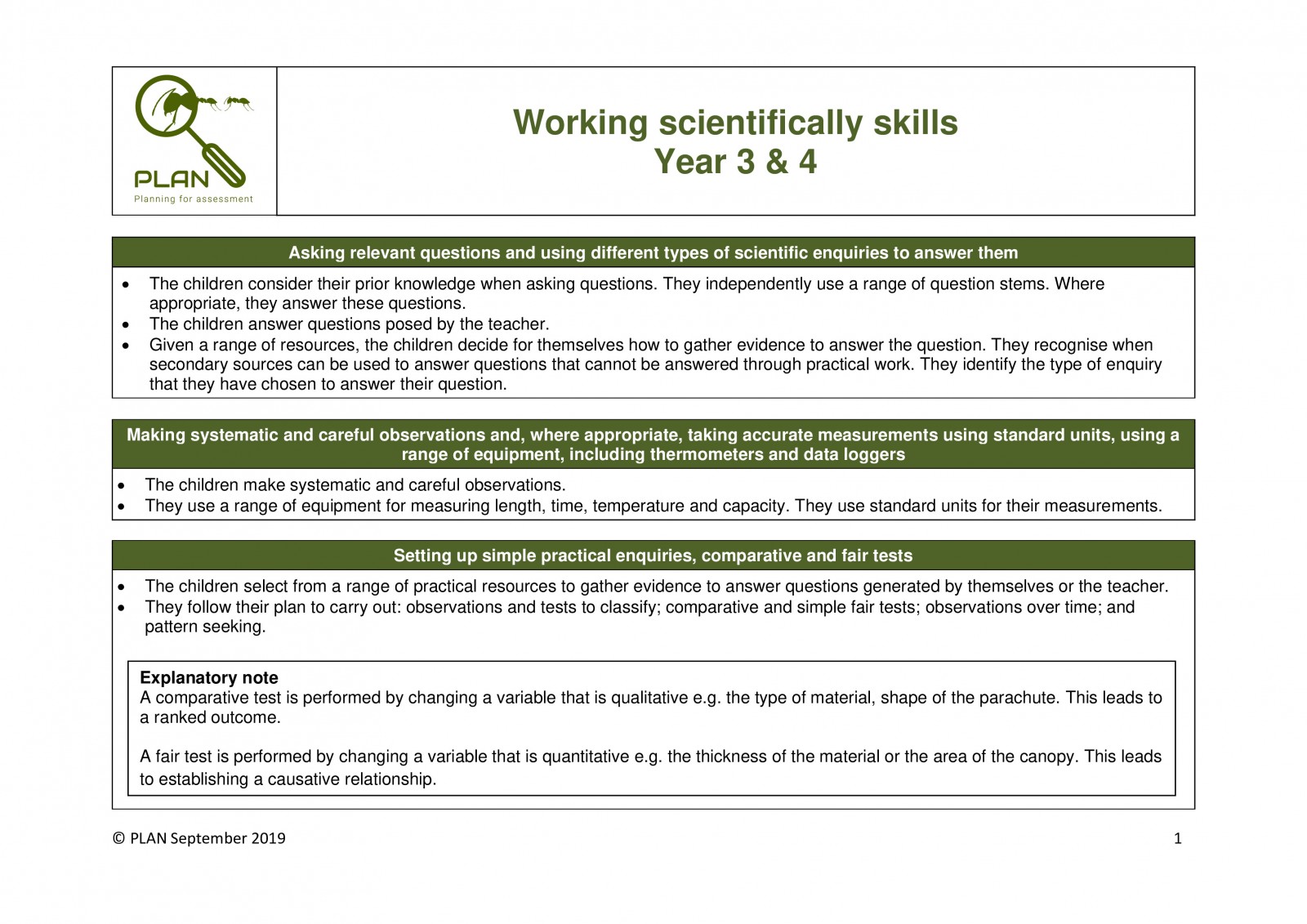
Lower Key Stage 2 - Years 3 and 4
The principal focus of science teaching in Lower Key Stage 2 is to enable pupils to broaden their scientific view of the world around them.
They should do this through exploring, talking about, testing and developing ideas about everyday phenomena and the relationships between living things and familiar environments, and by beginning to develop their ideas about functions, relationships and interactions.
They should ask their own questions about what they observe and make some decisions about which types of scientific enquiry are likely to be the best ways of answering them, including observing changes over time, noticing patterns, grouping and classifying things, carrying out simple comparative and fair tests and finding things out using secondary sources of information.
They should draw simple conclusions and use some scientific language, first, to talk about and, later, to write about what they have found out.
‘Working scientifically’ is described separately at the beginning of the programme of study, but must always be taught through and clearly related to substantive science content in the programme of study.

Curriculum Coverage
|
Year 3 |
Animals, including Humans |
Rocks |
Forces and Magnets |
Light |
Plants |
|---|---|---|---|---|---|
|
Year 4 |
Animals, including Humans |
Living Things and their Habitats |
Electricity |
Sound |
States of Matter |
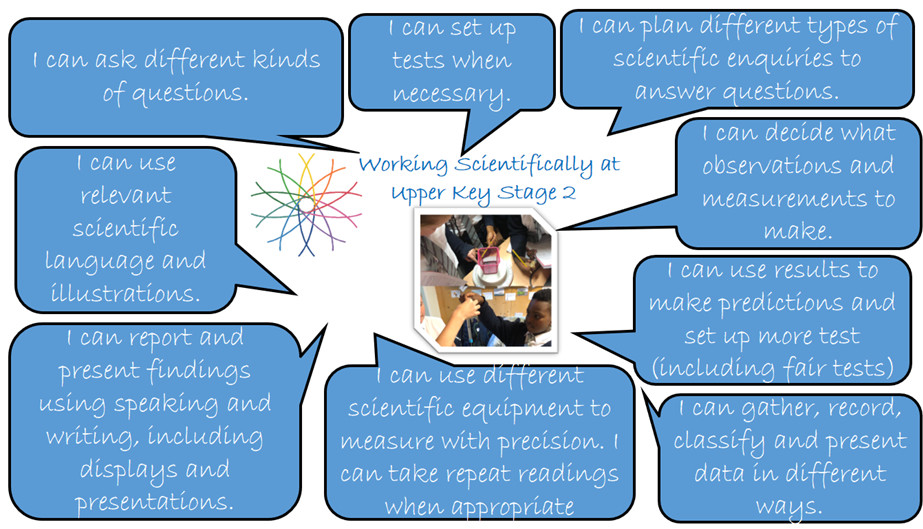
Upper Key Stage 2 - Years 5 and 6
The principal focus of science teaching in Upper Key Stage 2 is to enable pupils to develop a deeper understanding of a wide range of scientific ideas.
They should do this through exploring and talking about their ideas; asking their own questions about scientific phenomena; and analysing functions, relationships and interactions more systematically.
At Upper Key Stage 2, they should encounter more abstract ideas and begin to recognise how these ideas help them to understand and predict how the world operates.
They should also begin to recognise that scientific ideas change and develop over time.
They should select the most appropriate ways to answer science questions using different types of scientific enquiry, including observing changes over different periods of time, noticing patterns, grouping and classifying things, carrying out comparative and fair tests and finding things out using a wide range of secondary sources of information.
Pupils should draw conclusions based on their data and observations, use evidence to justify their ideas, and use their scientific knowledge and understanding to explain their findings.
‘Working and thinking scientifically’ is described separately at the beginning of the programme of study, but must always be taught through and clearly related to substantive science content in the programme of study.
Curriculum Coverage
|
Year 5 |
Earth and Space |
Forces |
Properties and Changes of Materials |
Animals, including Humans |
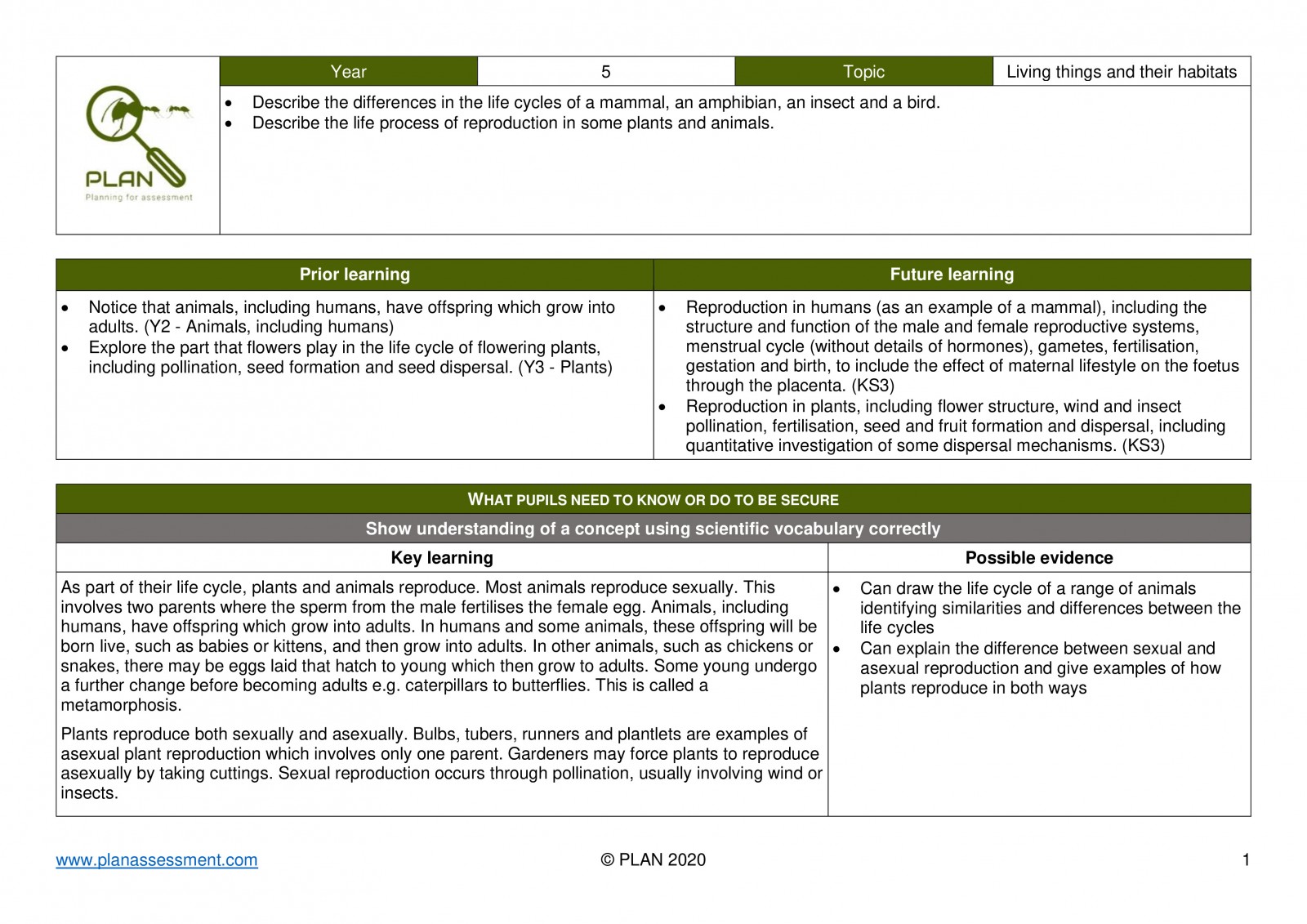
Living Things and their Habitats |
|---|---|---|---|---|---|
|
Year 6 |
Electricity |
Light |
Evolution and Inheritance |
Animals, including Humans |
Living Things and their Habitats |

Sequence of Learning
1 - Topic Cards
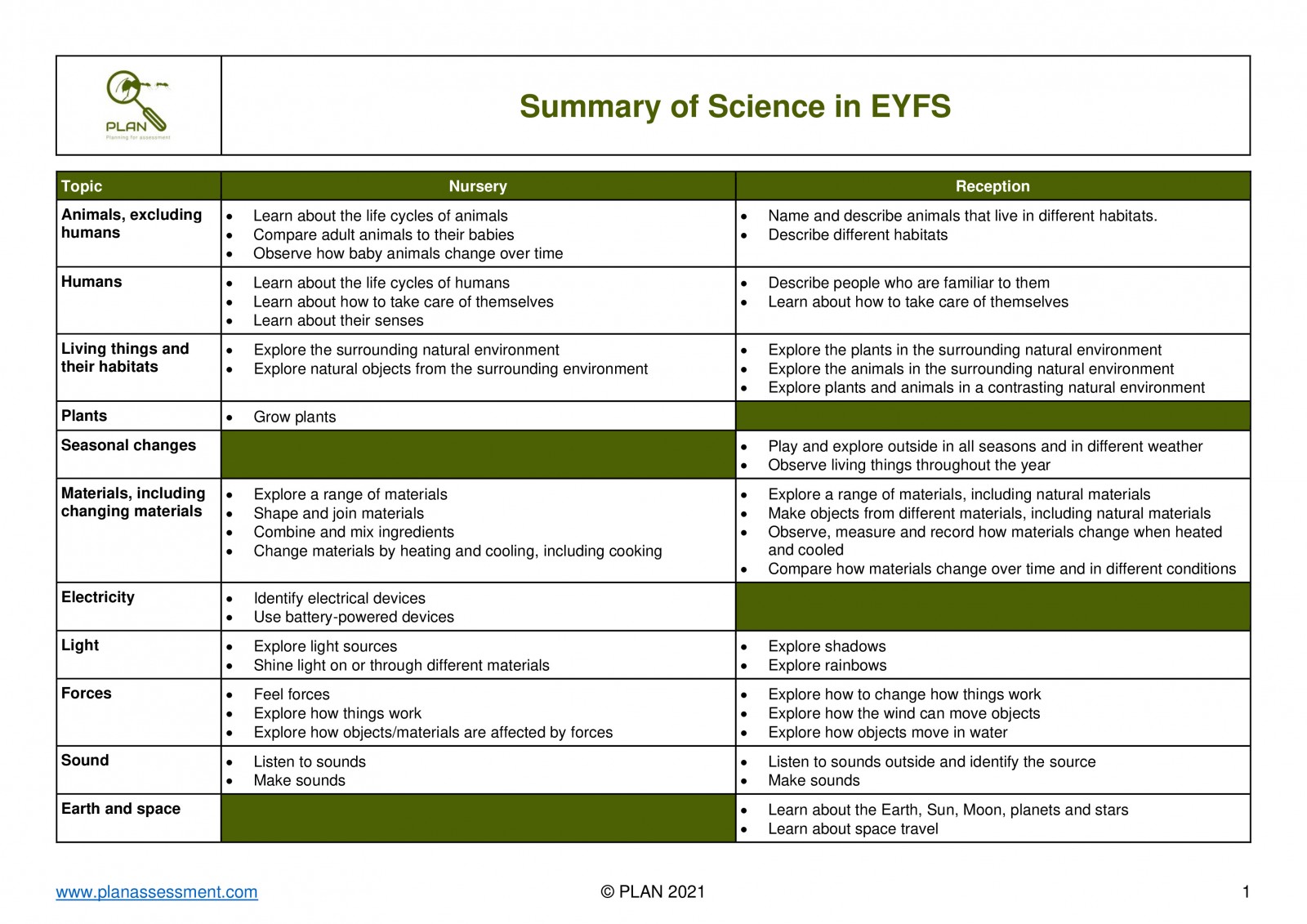
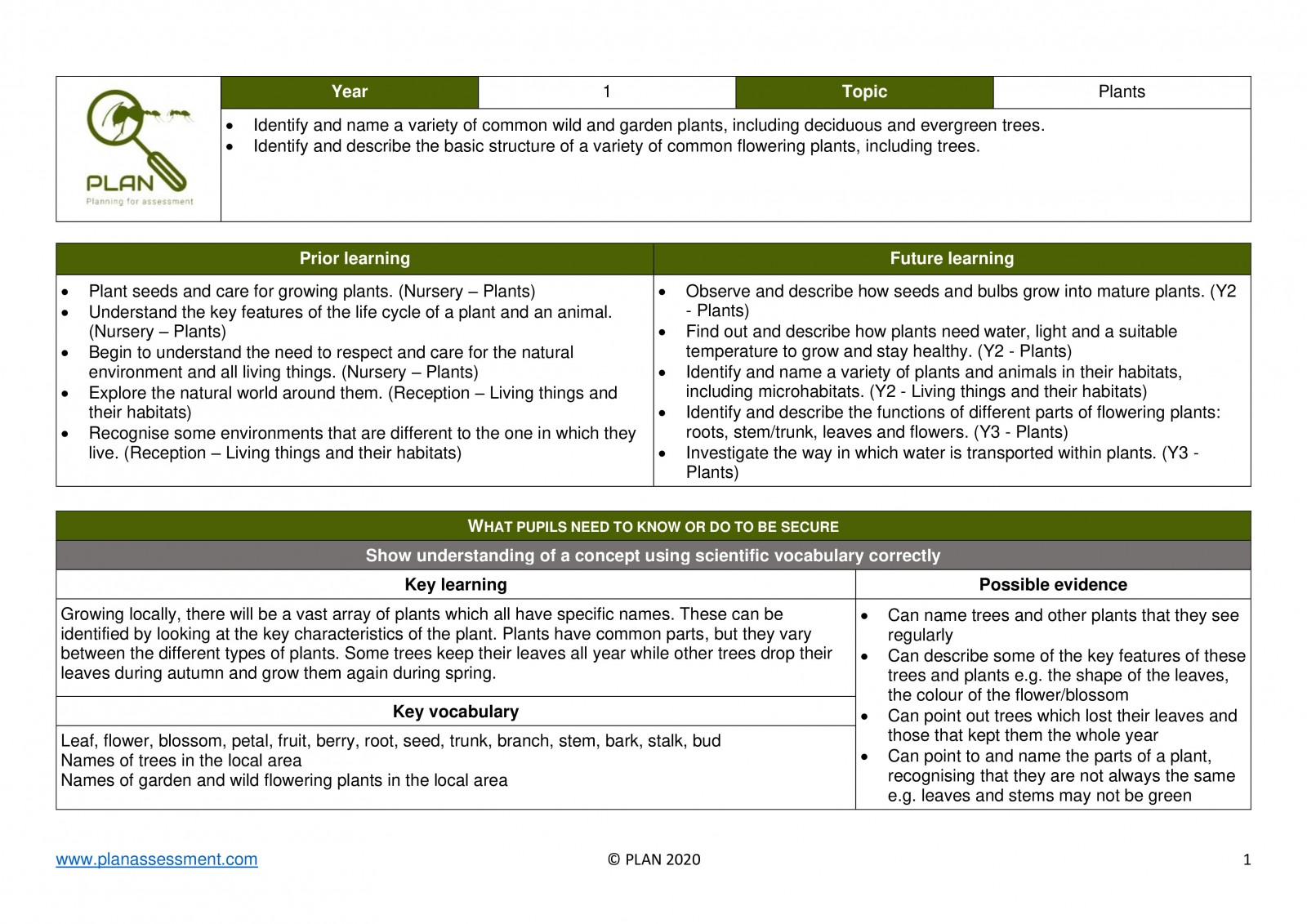
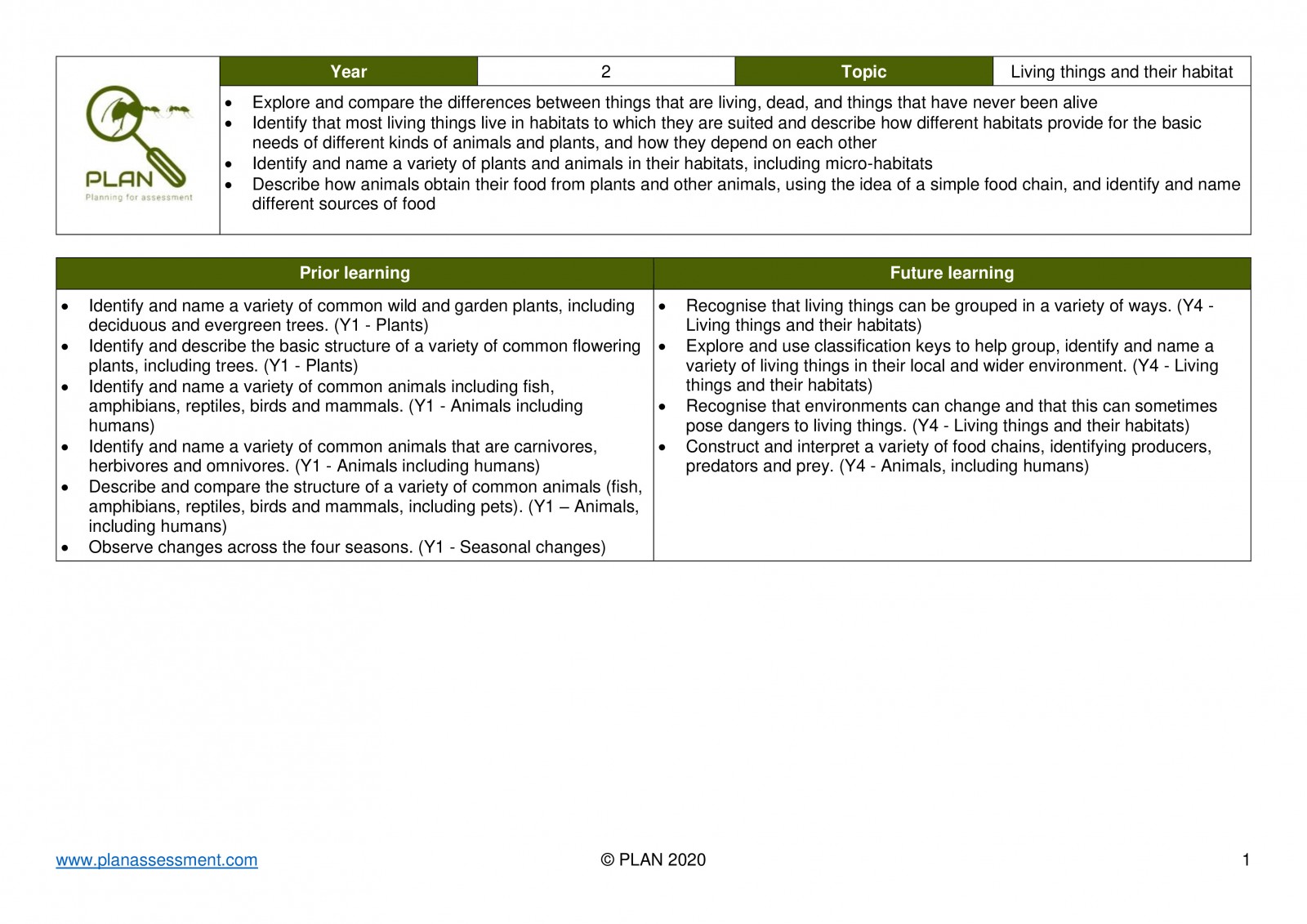
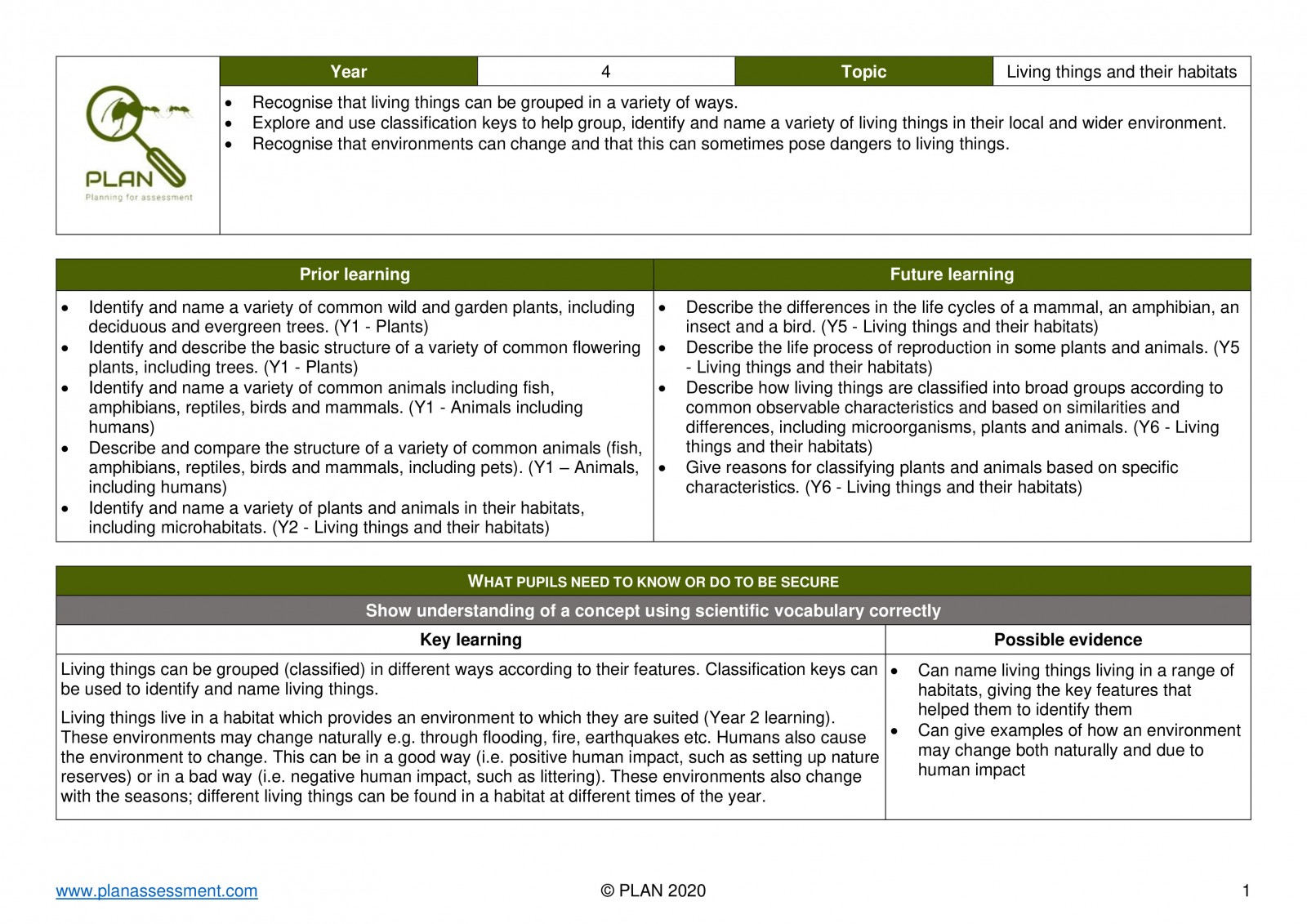
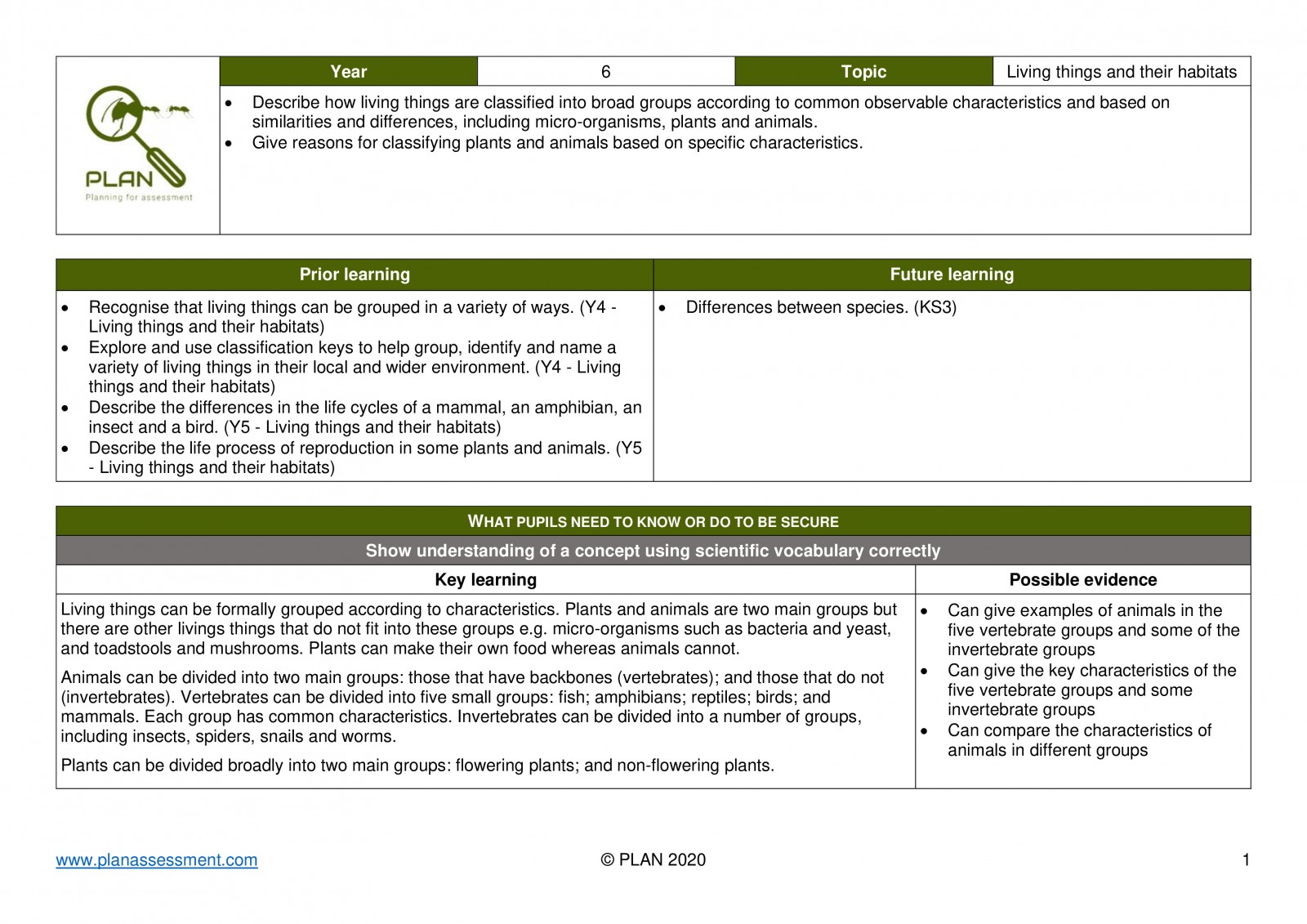
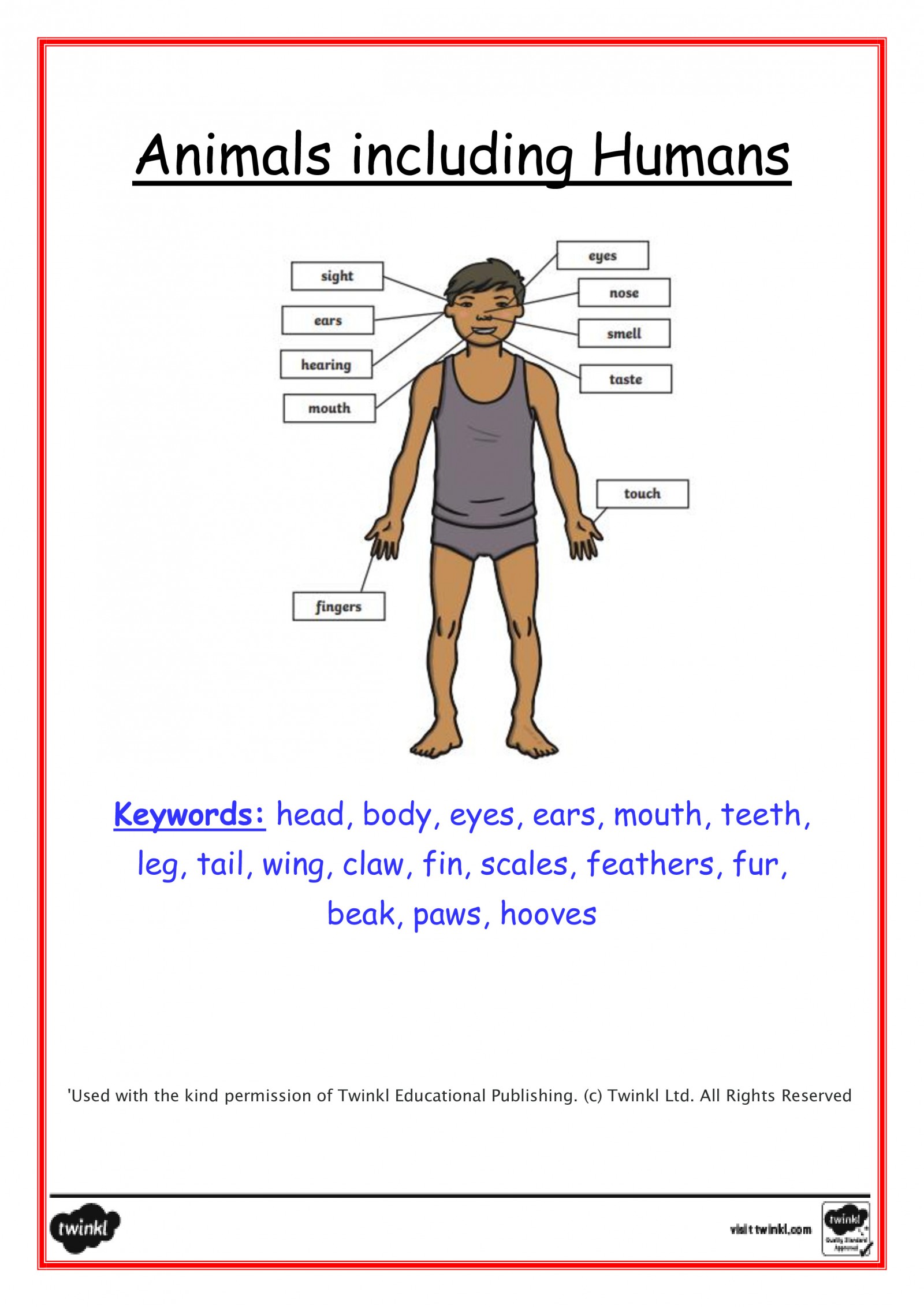
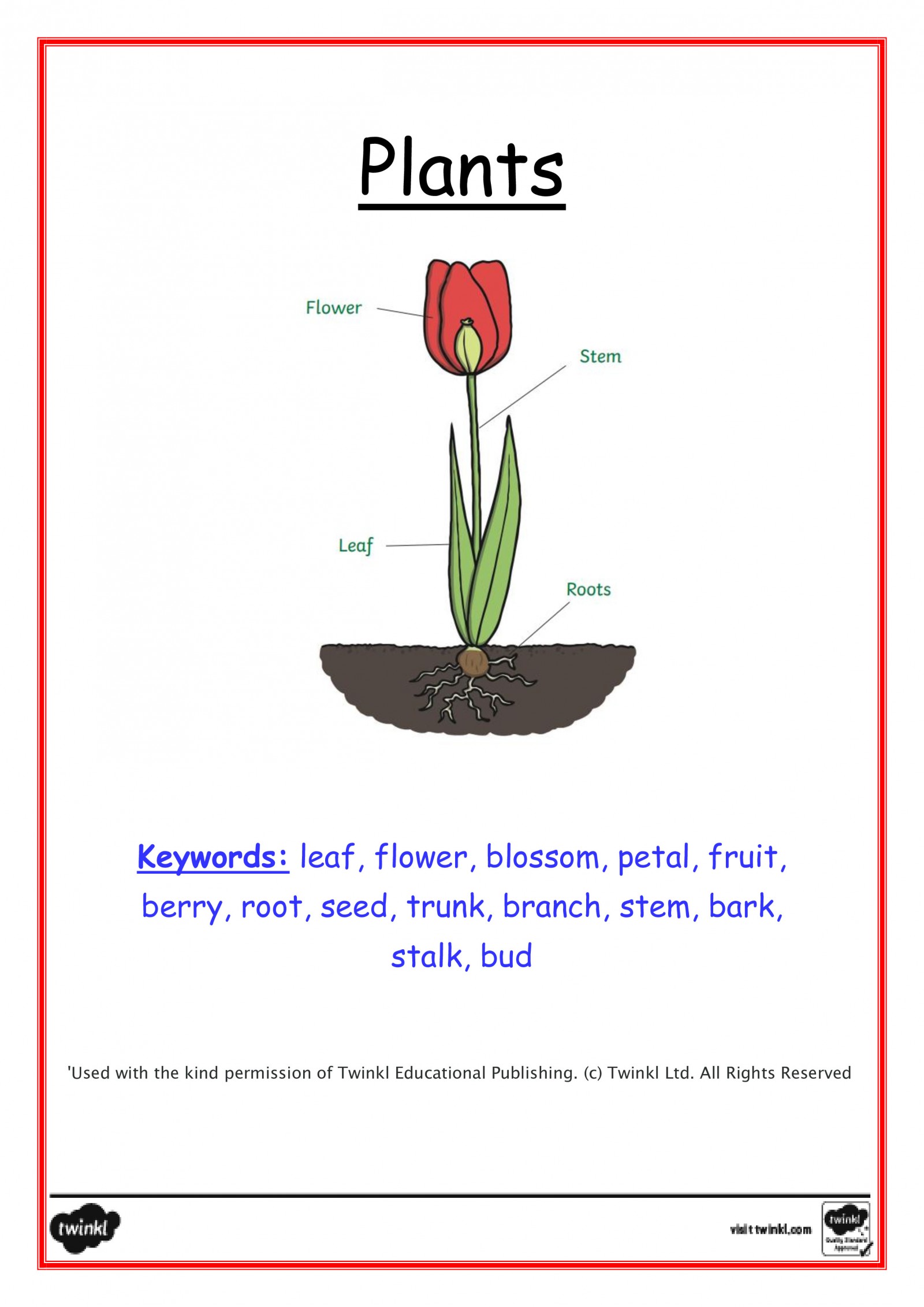
At the start of every unit, the children are introduced to a topic card. These include the key scientific language that will be explored and applied throughout their learning. The language is catered to the year group and is progressive throughout the phases. The core vocabulary has been taken from the PLAN assessment knowledge matrices. At the start of the unit, the class teacher will explore and define new language with the pupils and throughout the children are able to refer back to their topic cards and apply them within their learning.
Here are examples of the topic cards for each year group. You can support your child by exploring these keywords with them at home.


2 - KWLS
After the children have engaged with their topic cards, they then move on to completing a KWL. KWLs are organisers that help learners before, during and after a unit or lesson. Their aim is to engage pupils in a new topic, identify prior knowledge, outline the objectives of the unit and used to support children in assessing their progression within their learning.
Know
In the first column of the KWL grid, the children are asked to list what they already know about a topic. At OLSJ, the ‘know’ column outlines the prior knowledge pupils will have covered within their previous schooling. At the start of the unit, children are able to tick whether they have learnt an objective and underneath able to comment on what they remember. The teacher is then able to use these to plan any areas which may require revisiting and consolidating.
What
The second column is for pupils to note down what they ‘want to know’ about a topic. This is filled in by the children in the form of a question. Teachers are then able to use this information to support them into their medium-term planning and catering learning where possible to a chid led curriculum.
Learn
The last column is the ‘what did you learn column’. At OLSJ, this column is prefilled to the end of year objectives and children should use this as an assessment tool throughout the unit, referring back to this. The aim is that at the end of the unit, pupils will have ticked all the relevant learning objectives for the year.
3 - Concept Cartoons
The final stage in the unit introductory is engagement with a concept cartoon. Concept cartoons are designed to introduce science concepts in an everyday setting and develop oracy amongst. The cartoons are structured so each character has a differing opinion on the topic being discussed. All of the opinions presented are credible and invite learners to take part within the discussion. This is vital in identifying misconceptions. At the end of the unit, pupils return to the concept cartoon to demonstrate progression in their understanding. The school mainly uses Milgate’s Concept Cartoons and although these are visited at the start and end of a unit, a range may be used throughout to discuss new scientific ideas.
Medium Term Planning
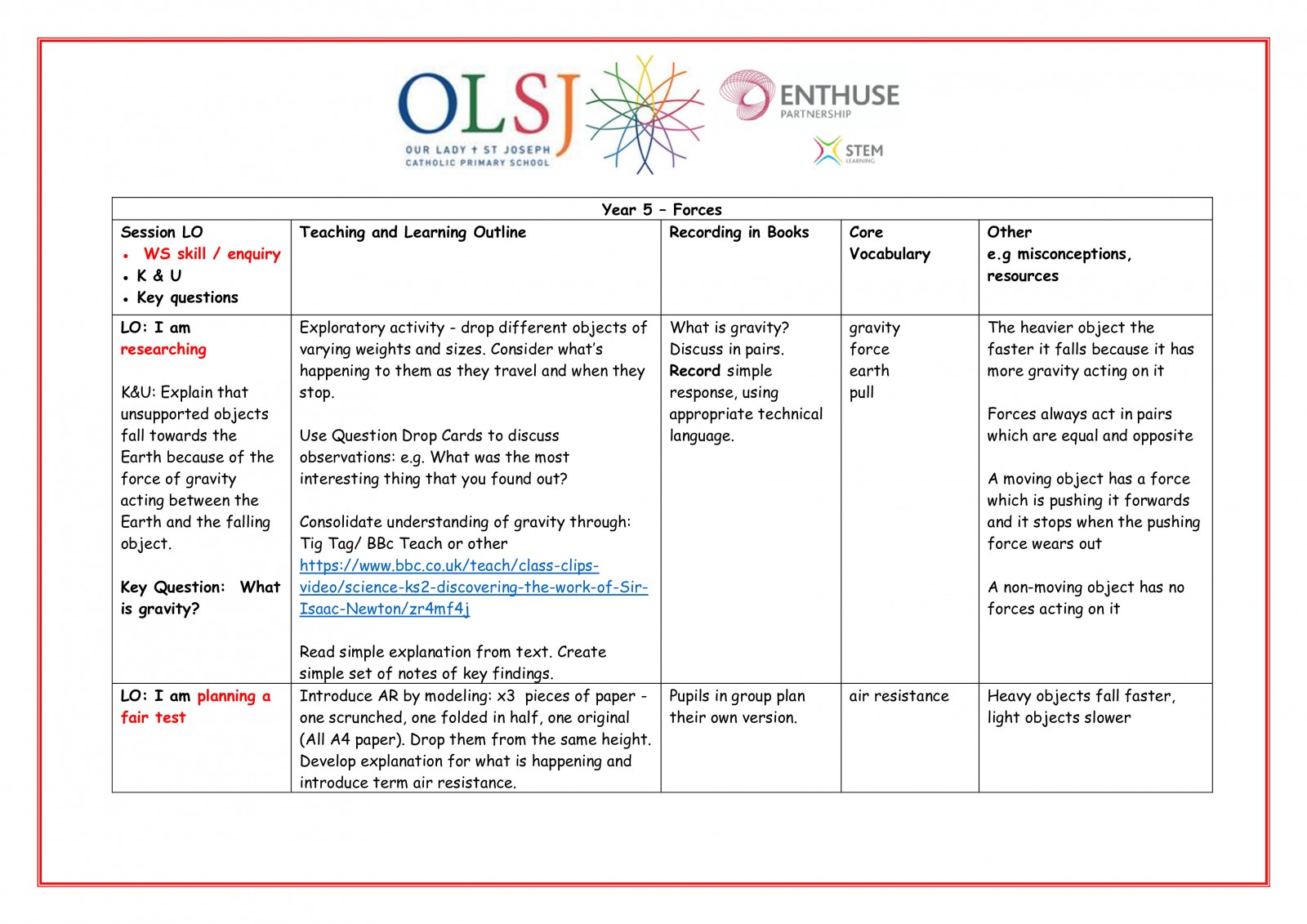
At OLSJ, we use a range of resources to support our medium-term planning including STEM, PLANAssessment and Hamilton Trust. The school is part of the STEM Enthuse Partnership and has worked on developing model medium-term plan units for Years 4 and 5, as examples for schools within Tower Hamlets. The ENTHUSE project developed a structure for medium-term planning which is now being embedded at OLSJ. At the centre, where possible, is a working scientifically focus for lessons.
Here is an example of what medium-term planning looks like at Our Lady and St Joseph:
Primary Science Quality Mark

The Primary Science Quality Mark is a yearlong CPD programme that helps schools to achieve a quality mark. It focuses on developing effective, confident Science leadership for whole school impact on Science teaching and learning. In 2020, OLSJ completed Round 18 and was awarded a Primary Science Quality Mark.